Home › Crawl Space & Attic HVAC
Crawl Space & Attic HVAC in Columbia, TN
Crawl space HVAC in Columbia, TN is the half of the system nobody looks at: ducts sweating in a damp crawl space, flex runs crushed in a hot attic, insulation fallen off the lines. If your house smells musty, the floors are cold in January, or the AC runs all day and loses, this page is about the part of the system that is probably causing it.
5-star ratedLicensed & insured in Tennessee25 years in businessColumbia, TN · Price in writing before work starts
What we check under and over your house
- Duct runs: disconnected, crushed, torn, or sagging flex; boots pulled off registers
- Sweating ducts: cold ducts in humid crawl air drip all summer, soak insulation, and feed the musty smell
- Duct insulation: missing or fallen insulation makes the attic or crawl the best-conditioned space you own
- Unit drainage: air handlers in crawl spaces and closets with pans and drains that clog quietly
- Winter risk: exposed pipes near crawl vents and heat strips that will be asked to cover for air leaks
Musty smell: crawl space or ducts?
People ask us this every summer. If the smell is strongest at floor level and after rain, suspect the crawl space. If it hits when the blower starts and fades as the system runs, suspect the coil, drain pan, or duct liner. Often it is both: a wet crawl feeds moist air to the ducts, and the ducts deliver the smell to every room. We check both in the same visit and tell you which fix comes first — sealing and repairing ducts, drying the crawl air, or cleaning a wet coil and pan. If the house needs full crawl-space encapsulation, we will tell you plainly that it is a bigger job than duct work and what it involves, rather than selling you a dehumidifier as a shortcut.
What an inspection report from under your house should show
| We check | Good looks like | Bad looks like — and what it costs you |
|---|---|---|
| Flex duct runs | Stretched smooth, strapped up, gentle turns | Sagging in bellies, kinked at supports, lying in crawl moisture — air arrives weak and warm |
| Connections at boots and collars | Sealed and clamped; no air felt at the joint with the system running | Pulled apart or taped-and-failed — you are conditioning the crawl space |
| Duct insulation | Intact jacket, dry, full coverage | Torn or fallen insulation; ducts sweating through the summer |
| Drainage at the unit | Pan dry or draining; float switch wired and tested | Standing water in the pan, drain pitched the wrong way |
| Crawl air itself | Dry smell, no visible growth on joists near ducts | Musty air feeding straight into leaky returns — the house smells like the crawl |
Look first, quote second — and the hanging-unit question
Under-house and attic work starts with an evaluation, not a quote: the runs, connections, insulation, and drainage get inspected and photographed first, and only then is work priced — because the difference between “re-hang one run” and “the system under this house is at the end” is not visible from the crawl door. The attic gets the same rule: we look and measure before anyone prices attic duct or drainage work. One finding callers ask about deserves a straight answer here: a unit or duct run that has dropped because its straps or supports have failed. Re-hanging and supporting the equipment is repair work we can price in writing from the photos. Whether any of that cost is covered by an equipment warranty is a separate question that only the warranty terms for your exact unit can answer — we will not promise coverage we cannot see, and anyone who does, sight unseen, is guessing with your money.
The attic half of the story
Attics get the crawl space's press, but on a July afternoon a Columbia attic can run 130 degrees and hotter, and every duct run up there is a cold pipe in an oven. Supply air can pick up real heat between the air handler and the vent if the insulation is thin, torn, or missing — the system cools fine and the rooms still lag. Attic units add a second risk: the drain pan sits over your ceiling, so the float switch up there is not a detail, it is the part standing between a clogged drain and a stained, sagging ceiling. On an attic visit we check duct insulation end to end, the pan and both drains, and whether the unit can actually be serviced where it sits — some builder installs leave a tech inches to work in, and that fact belongs in any replacement quote for the house.
Crawl space and attic care, by season
| Season | Under the house | Over the house |
|---|---|---|
| Spring | After the wet months: look for standing water, fallen insulation, any run lying in moisture | Check the attic drain pan is dry before cooling season loads it |
| Summer | Sweating check: ducts should be dry on the outside; dripping means insulation or sealing work | Keep stored boxes off duct runs; crushed flex in a hot attic is a double loss |
| Fall | Close or check crawl vents per your setup; look for pipes near vents that froze last winter | Confirm the attic unit's heat checks out before the cold snap, strips included on a heat pump |
| Winter | On the coldest nights, a drip at outside-wall faucets protects pipes the furnace cannot reach | A new ceiling stain in winter is a drain or a roof — either way, look the same week, not in spring |
After heavy rain — the ten-minute crawl check
December is Columbia’s wettest month, and spring storms stack rain on ground that is already soaked. You do not need to crawl the whole space — stand at the crawl door with a bright light and look for four things:
- Standing water or a new mud line on the piers — water that reaches duct runs or the air handler is an HVAC problem now, not a spring project
- Insulation hanging lower than last time — wet insulation sags and pulls flex duct down with it
- A drip line under a duct run in summer — that is sweating, and it means the insulation or the seal on that run has failed
- Anything that moved: a run knocked off a boot by an animal, a drain line lying in a puddle instead of draining away
Photograph what you see from the door and send it when you call. Half the time that photo tells us whether you need a duct visit, a drying conversation, or just a note to recheck after the next dry week.
Encapsulation, step by step — and which steps are ours
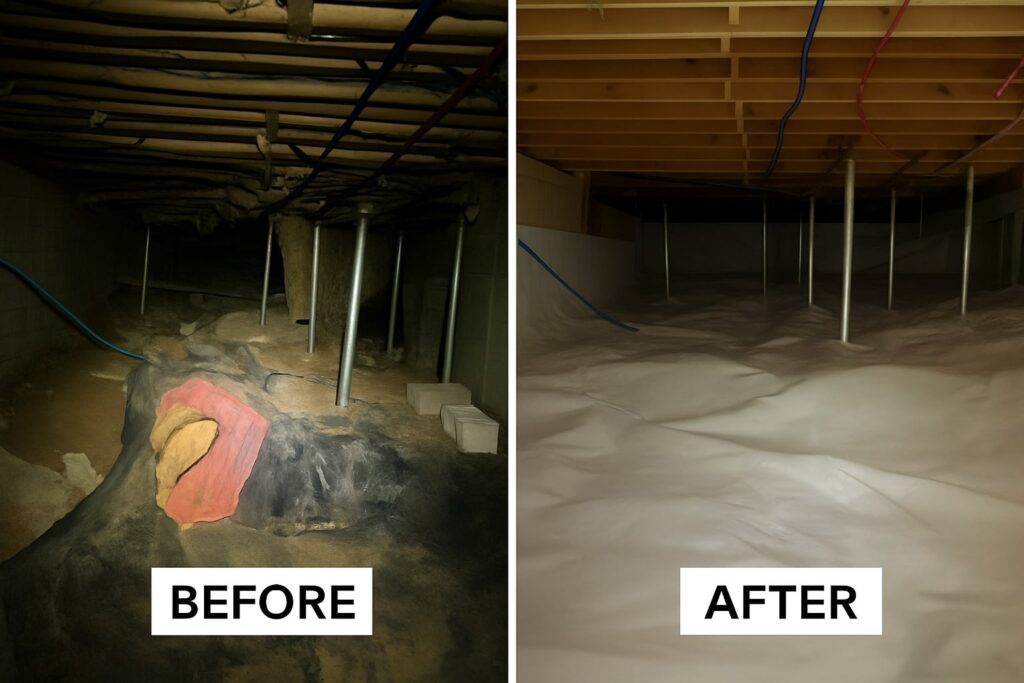
“Encapsulation” gets quoted as one word and one price, which hides the fact that it is four jobs from at least two trades. The report any homeowner should be able to build from a crawl quote is this one — and we put our own name only on the steps we actually do:
| Step | What it involves | Whose job it is |
|---|---|---|
| Clean-out and drainage | Debris and old fallen material out; water that pools gets a drainage path and, where needed, a sump | A crawl-space contractor — we will say so and sequence our work after it |
| Ground liner, sealed | A heavy liner over the ground, sealed at seams and piers, run up the walls; vents closed off | A crawl-space contractor — this is the step the word “encapsulation” mostly means |
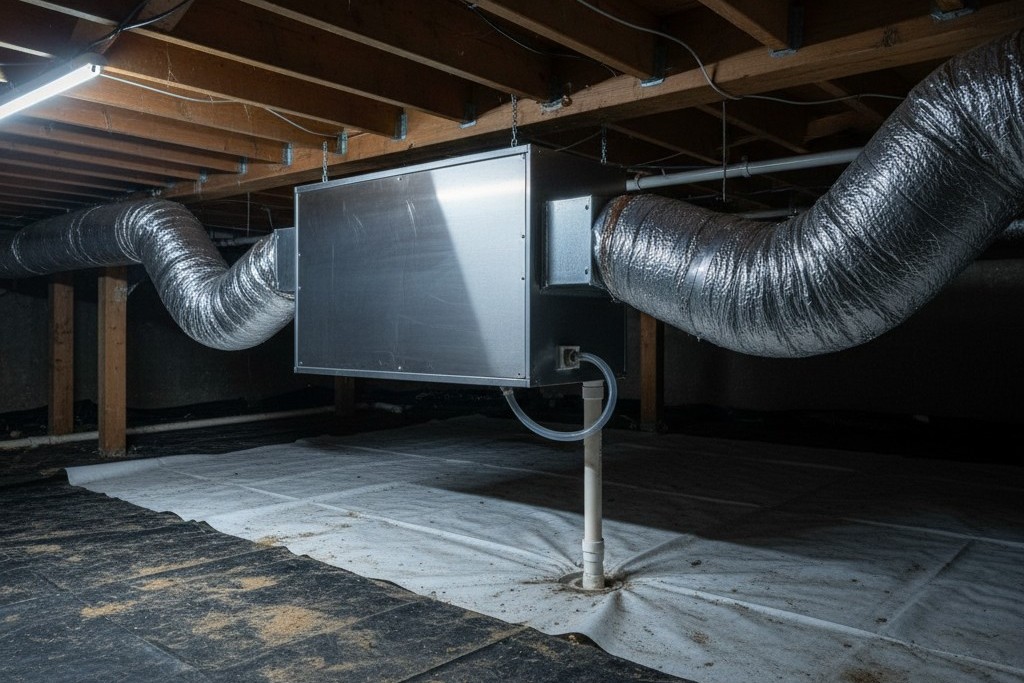
| Ducts sealed and insulated | Every run sealed at the joints, insulation made whole, sags strapped out — done after the space is dry, or the work gets sealed in wet | Ours — this is HVAC work, and it is where the comfort and bill gains actually come from |
| Equipment drainage put right | Air handler pan, drain pitch, and float switch checked and corrected while the space is open | Ours |
| The air dried and held | A dehumidifier sized for the crawl, draining on its own, holding a set humidity — see the air quality page for how sizing works | Ours, when it ties to the HVAC system |
Two translations worth having before you sign anyone’s crawl quote: a vapor barrier is ground cover alone — useful, and not the same job as full encapsulation — and a conditioned crawl space goes one step further and brings the space inside the home’s heated envelope. Quotes that use the three terms as if they were one job are how homeowners pay for the third and get the first.
How the attic and crawl space change the size of system your house needs
The load calculation counts the house as it stands — and the attic and crawl space are part of that count. A hot attic over thin ceiling insulation adds cooling load all summer afternoon. A vented, damp crawl space adds load twice: cold floors pull heat out in winter, and wet air leaking up through the floor adds humidity the AC then has to remove in summer. Seal and dry those spaces and the load drops — which is why the order matters. If a system is being replaced, the envelope work comes first and the Manual J load calculation runs after, on the improved house; size the system to the old, leaky house and it short-cycles in the fixed one. To be plain about whose work is whose: Duck River's part is the HVAC side — ducts sealed and insulated, equipment drainage, airflow measured, and a dehumidifier tied to the system where one is fitted. Liners, drainage, and vent closing belong to the crawl space contractor, and attic insulation belongs to an insulation contractor. We photograph what we find and tell you which list each item sits on before anyone spends money.
Proof on crawl and attic work, not promises
- Licensed & insured in Tennessee, working out of 1230 Industrial Park Rd, Columbia
- Photos from under and over your house — every finding in the inspection table above, shown, not summarised
- Scope honesty in writing: our quote names only the HVAC steps. If the house needs liner or drainage work first, the quote says whose job that is and what order to run the work in
- A humidity reading under the house recorded on the inspection, so a later “is it drier?” has a starting number
Never had the crawl space or attic ducts looked at?
Call for an inspection. We go under or over the house, take photos of sweating, fallen, or leaking duct runs, and price the repair in writing — you see the same pictures we do.
Licensed & insured in Tennessee · ★★★★★ 5-star rated · 25 years in business · 1230 Industrial Park Rd, Columbia, TN
Crawl & attic FAQs
Why do my crawl space ducts sweat in summer?
Cold air inside the duct meets hot, wet crawl air outside it, and water condenses on the metal or soaks the flex jacket — the same reason a cold glass sweats. Torn or thin insulation makes it worse. The fix is sealed, well-insulated ducts, and where the crawl itself is very wet, drying the crawl air too.
My floors are cold in winter even with the heat running. Why?
Heat leaking from ducts into the crawl space, cold air washing under the floor from open vents, and missing duct insulation are the usual three. The furnace gets blamed; the crawl is the thief.
Do you do crawl space encapsulation?
Our scope is the HVAC side: ducts, sealing, insulation, drainage for the equipment, and dehumidification tied to the system. When a house needs full encapsulation — liner, sealed vents, drainage — we will walk you through what that job is and the order to do the work in, so the HVAC fixes are not wasted under a wet house.
Will sealing my crawl space change what size HVAC system I need?
It can. A drier, sealed crawl space cuts the moisture load in summer and the heat loss through the floor in winter, so a load calculation run after the work can land on a smaller system than one run before it. It is one reason we say: envelope work first, sizing second — the order is spelled out on the system replacement page.
Do you do the encapsulation itself, or only the HVAC part?
Only the HVAC part: ducts sealed and insulated, equipment drainage checked, airflow measured, and dehumidifier tie-in where fitted. The liner, drainage, and vent work belongs to a crawl space contractor. On an inspection we sort every finding into those two lists in writing, so you are not sold one job dressed as the other.
Related work on this site
Under-house air problems rarely stop at the floor: the duct side is on our duct repair & cleaning page, the damp-air side is on the indoor air quality & dehumidifiers page, and the towns where we run these inspections are on the areas we serve page.
The part of the system nobody checks is causing the call.
Call for the crawl or attic inspection. Photos of what we find, the repair priced in writing, and ducts sealed and insulated so the fix stays fixed.
Licensed & insured in Tennessee · ★★★★★ 5-star rated · 25 years in business · 1230 Industrial Park Rd, Columbia, TN