Home › Ventilation & ERV
Ventilation & ERV Installation in Columbia, TN
An ERV installation in Columbia, TN gives a house the one thing a tight modern house cannot get on its own: fresh air on purpose. An energy recovery ventilator swaps stale indoor air for fresh outdoor air all day, in both directions at once, and on the way through it hands heat and moisture from one stream to the other — so the fresh air arrives close to house temperature instead of arriving as raw July air or a January draft. Your AC does not do this job: it cools and filters the same indoor air and sends it back around. If your house smells like last night's cooking at breakfast, this is the page for that.
5-star ratedLicensed & insured in Tennessee25 years in businessColumbia, TN · Price in writing before work starts
What an ERV does, in plain words
Two small fans run the exchange. One pulls stale air out of the house — usually from the bathrooms and kitchen side, where air picks up moisture and smells. The other pulls fresh air in from outside and sends it toward the living rooms and bedrooms. Inside the unit, the two streams pass each other through a core, close but never mixed. In summer, the outgoing cooled air takes some of the heat and humidity out of the incoming air before it reaches your rooms. In winter it runs the other way: the warm air leaving gives most of its heat to the cold air coming in. The house gets its air changed without paying full price to heat or cool the replacement air — that trade is the whole point of the machine, and it is why an ERV is not just a fan in a box.
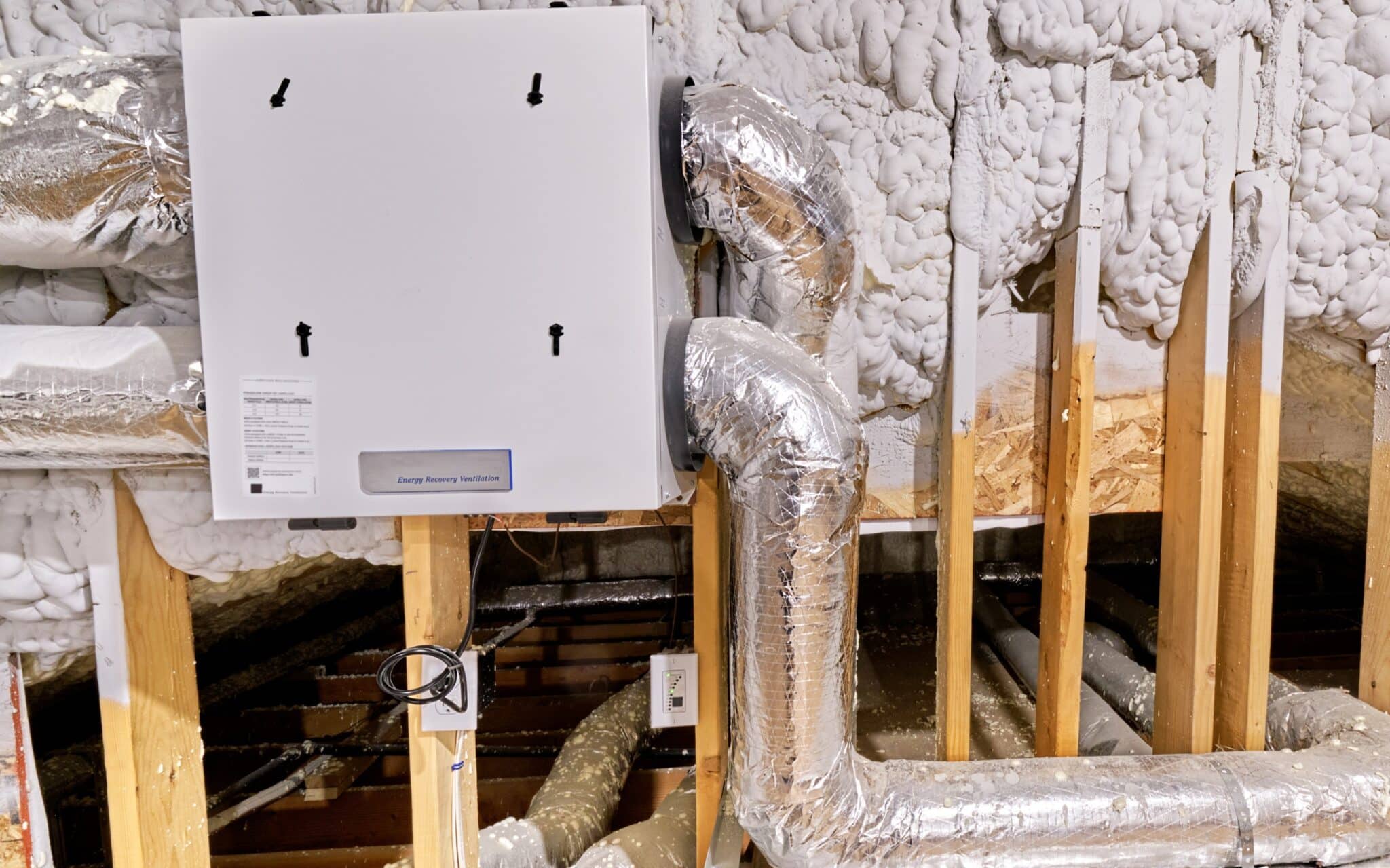
The three calls this page answers
“Check the ERV we have”
The house already has an ERV and nobody is sure it still works. The check covers its filters, the core, airflow in both directions, the balance between them, and the controls. An ERV running with clogged filters or out of balance is not ventilating — it is just humming.
“We need another one”
One ERV serves part of the house and the rest never got covered: a large home, a wing or addition, a finished space its ducts never reached. We measure what the existing unit actually covers first, then size the second unit to the uncovered part.
“The house never gets fresh air”
No ERV, and the house is built tight — newer Columbia and Spring Hill builds, spray-foam attics, and good windows all seal a house well enough that stale air, cooking smells, and winter window condensation become the standing complaint. That is a first install.
Signs a house is short on fresh air
- Cooking and cleaning smells still hanging around hours later
- Windows sweating on the inside in winter — indoor moisture with nowhere to go
- Bedrooms stuffy by morning, air in the house feeling used up
- Bathroom mirrors that stay fogged long after a shower
- A newer, tight house where every one of the above showed up after the build or the remodel
One line keeps this page honest: stale air is a comfort problem worth fixing on its own terms. We will not sell you a ventilator as a cure for illness, and we will not scare you into one. If the complaint is damp and musty rather than stale, that is moisture — start on the air quality & dehumidifiers page, because an ERV is not a drying machine.
An ERV job, step by step
Walk the house and the complaint
Which rooms feel stale, where the moisture shows up, and — for a check — what the existing unit is and is not doing. For an install, where the unit can live and how its air will get in and out.
Measure the airflow, both directions
On a check, we read what the unit moves out and what it moves in. The two should match closely; a unit pushing more one way than the other pressurises or starves the house, which can pull crawl space air in or push house air into walls.
Size and place the unit
ERVs are sized by airflow against the house's size and occupancy — not by the biggest box on the shelf. Placement follows the duct runs: tied into the return system, or on its own short duct runs to the rooms that need it.
Fit it, wire the control, set the routine
Most ERVs run low and steady all day, with a boost setting the bathroom or kitchen can trigger after a shower or a big cook. The control goes where you will actually use it, and the routine gets set before we leave.
Show you the two things you own
The filters — where they are, how they slide out, how often they want washing or swapping — and the control. An ERV asks little, but the filter is the little it asks.
Kitchen and bathroom exhaust vents — the other half of ventilation
An ERV is balanced ventilation — air out and air in together. A house also has one-way exhaust jobs, and fitting or fixing those vents is ventilation work we take on by itself: a bathroom fan that needs a proper vent run to the outside, a kitchen range hood that should exhaust outdoors instead of blowing grease back into the room, and exhaust lines that were never run when the house was built. Two findings come up again and again in Maury County homes. The first is a bath fan vented into the attic — the moisture leaves the bathroom and lands on the roof deck, which is a rot and musty-attic problem wearing a ventilation costume. The second is the recirculating kitchen hood, the kind with a charcoal pad that moves cooking smell from above the stove to the rest of the house. If you are having exhaust vents fitted, the questions to ask any company are the ones we answer on the quote: where does the run leave the house, what is it made of, and how is the outside cap set so pests and weather stay out.
| What you notice | What it usually is | The fix |
|---|---|---|
| Bathroom mirror fogged for an hour, paint peeling near the ceiling | Fan too small, fan vented into the attic, or no vent run at all | A fan sized to the room with a real duct run to the outside |
| Cooking smell in every room, grease film on the cabinets | A recirculating hood, or a hood duct that is crushed or disconnected | An exhaust run to the outside, sized to the hood |
| Fan loud but the room never clears | Often the duct, not the fan — a long, kinked flex run chokes it | Shorten and straighten the run; then judge the fan |
Three jobs that get sold as one “air” job — they are not the same
| Job | What it does | Fixes | Does not fix |
|---|---|---|---|
| Ventilation (this page) | Changes the air: stale air out, fresh air in, through an ERV or exhaust vents | Stale air, lingering smells, a tight house that never breathes | Wet air — humidity itself is the dehumidifier's job |
| Dehumidifying | Dries the air already in the house, through the duct system | Sticky at 72°, musty vents, a house over 55% humidity | Stale air — dried old air is still old air |
| Duct cleaning | Removes dust and debris from inside the HVAC ducts | Buildup inside the runs | Air change, humidity, or a room with no vent at all |
Proof on ventilation work, not promises
- Licensed & insured in Tennessee, working from 1230 Industrial Park Rd, Columbia
- Airflow read in both directions on an ERV check, with the balance between the two streams in writing — the number that says whether the unit ventilates or just hums
- Every exhaust run ends outside, with the exit point shown to you — never into an attic, a crawl space, or a soffit cavity
- Each job priced as its own line: an ERV check, an ERV install, and exhaust vent work are separate lines, so you never pay for the one your house does not need
Not sure if your house needs an ERV, an exhaust vent, or neither?
Call and describe what the air in the house is doing — stale, damp, or smelly are three different calls. We will tell you which job it is, and if it is a free fix like a blocked vent cap, we will say that on the phone.
Licensed & insured in Tennessee · ★★★★★ 5-star rated · 25 years in business · 1230 Industrial Park Rd, Columbia, TN
Ventilation & ERV FAQs
What does an ERV do?
An ERV — an energy recovery ventilator — swaps a house's stale indoor air for fresh outdoor air, steadily, in both directions at once. On the way through, the two air streams pass each other inside a core that moves heat and moisture between them, so the fresh air coming in arrives closer to the house's temperature and humidity instead of arriving as raw July or January air. It is planned fresh air, not a leak and not an open window.
I already have an ERV. Can it be checked — and can a house have a second one?
Yes to both. An ERV check covers its filters, the core, airflow in both directions, balance between the two streams, and the controls — an ERV that is running unbalanced or with clogged filters is not ventilating the way it was installed to. A second ERV makes sense when the first one only serves part of the house: a large home, a separate wing or addition, or a finished space the first unit's ducts never reached. We measure what the existing unit actually covers before anyone prices a second one.
Is an ERV the same as a dehumidifier?
No. A dehumidifier removes moisture from the air already in the house — that is the indoor air quality page's job. An ERV changes the air itself: stale air out, fresh air in, with some heat and moisture handed from one stream to the other on the way through. A house can need one, the other, or both, and the deciding test is different: a humidity reading for the dehumidifier, stale air, lingering cooking smells, and winter window condensation for ventilation.
How much looking-after does an ERV need?
Little, and it is mostly one job: the filters. They slide out by hand and want washing or swapping on the maker's schedule — a clogged ERV filter quietly turns the ventilation off while the fan still runs. Beyond that, the core and the outside intake and exhaust caps want a look when the system gets its tune-ups, which is why an ERV check pairs naturally with the maintenance visits.
Related work on this site
Ventilation sits between three neighbours: moisture in the air is the indoor air quality & dehumidifiers page, the ducts the air travels in are the duct repair & cleaning page, the furnace whose flue is its own kind of venting is on the heating & furnace repair page, and ductless rooms that need their own air answer are on the mini-splits page. Every town we fit ERVs in is on the areas we serve page, and the short answers are gathered on the HVAC FAQs page.
A tight house should still get fresh air — on purpose.
Call for an ERV check or a first-install quote. Airflow measured both ways, every exhaust run ending outside, and the price in writing before work starts.
Licensed & insured in Tennessee · ★★★★★ 5-star rated · 25 years in business · 1230 Industrial Park Rd, Columbia, TN