Home › Dryer Vent Cleaning
Dryer Vent Cleaning in Columbia, TN
Dryer vent cleaning in Columbia, TN is the job for the pipe nobody thinks about: the dryer's own exhaust run, from the back of the machine, through the wall or floor, to the hood outside. It fills with lint a little at a time until the dryer is working against its own exhaust — loads take two cycles, the laundry room runs hot, and the dryer runs longer and hotter than it should. One thing to know before anything else on this page: this is not air duct cleaning. The dryer vent is not part of your heating and cooling ducts, and cleaning one does nothing for the other. They are separate jobs, and we price them separately.
5-star ratedLicensed & insured in Tennessee25 years in businessColumbia, TN · Price in writing before work starts
Two pipes, two jobs — the distinction that matters
| Dryer vent cleaning (this page) | Air duct cleaning | |
|---|---|---|
| The pipe | The dryer's own exhaust run — a single small duct from the dryer to the outside hood | The network of ducts carrying heated and cooled air from the HVAC system to every room |
| What builds up | Lint — fine, dry, and it packs tightest at elbows, sags, and the outside hood | Dust and debris spread along the runs |
| The complaint | Loads take two cycles, dryer and laundry room run hot, lint around the outside hood | Dusty rooms, musty start-up smell, remodel dust in the system |
| Why it matters | A choked vent makes the dryer run long and hot against backed-up exhaust, and packed lint in a hot air path is a fire risk — that is the plain reason this job exists | Air quality and a system not pushing air through years of buildup |
Signs the vent is loaded
- Normal loads take two cycles — or come out hot and still damp after one
- The laundry room gets hot and humid while the dryer runs
- The top of the dryer is hot to the touch mid-cycle
- Lint collected around the outside hood — or the hood flap barely lifts while the dryer runs
- The dryer shuts itself off before the load is dry, then works again after it cools
- You cannot remember the vent ever being cleaned — in most houses, it has not been
A burning smell from the dryer, or a dryer that feels scorching rather than warm, is a stop-and-call, not a finish-the-load. Stop the cycle, leave the machine off, and call. Lint packed into a hot exhaust path is exactly the combination this job exists to clear, and it does not get safer with one more load.
A dryer vent cleaning, step by step
Start at the dryer, and test the airflow
We run the dryer and read the air moving at the outside hood before anything is opened. That number is the “before” — and the honest test of whether the vent is the problem at all.
Pull the dryer out and open the connection
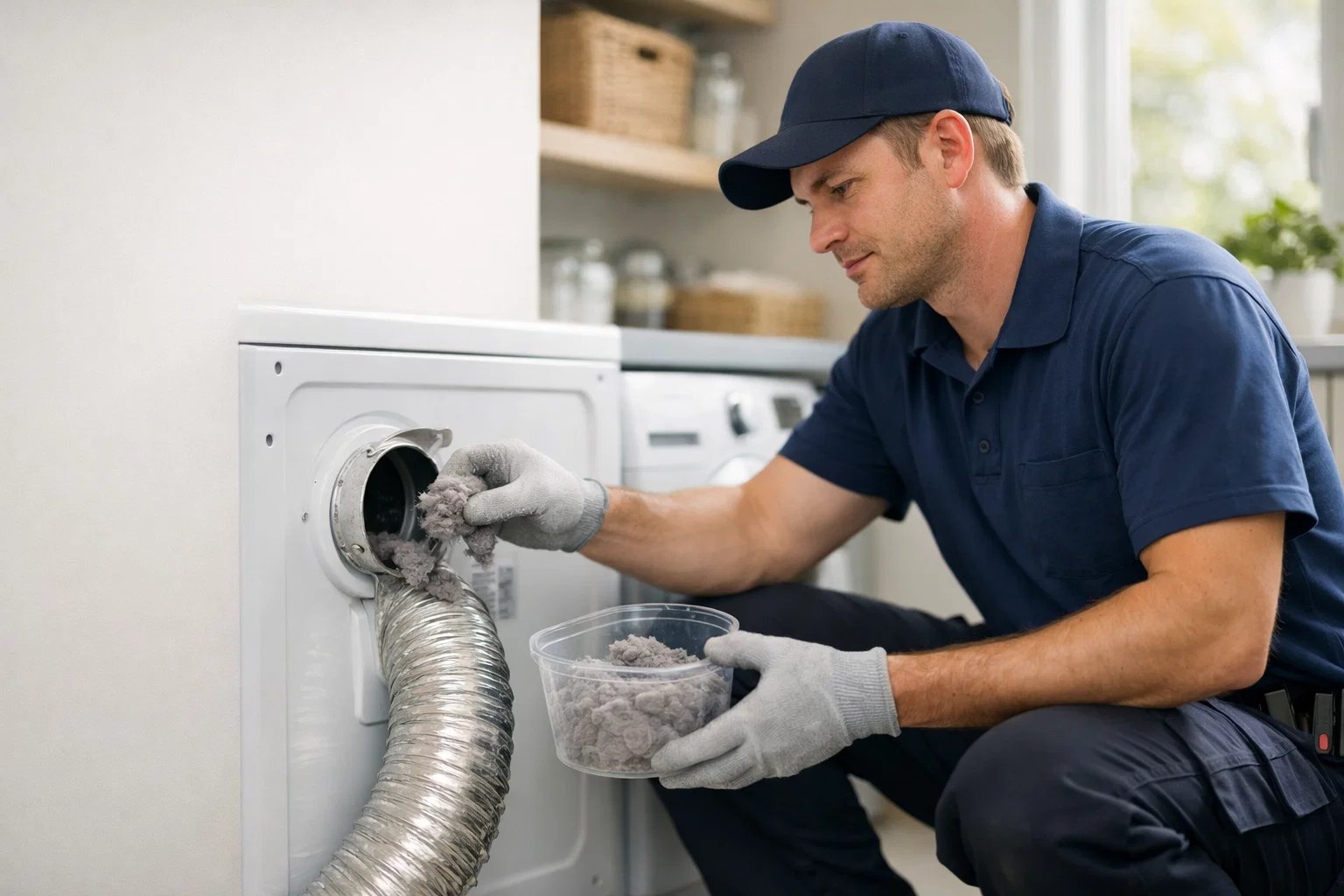
The transition piece behind the machine comes off, and the lint packed at the dryer's own outlet — the handful in the photo above — comes out first.
Brush and vacuum the full run
A rotating brush works the length of the run while a vacuum pulls what it loosens out. Full length means the whole run — through the wall or floor, every elbow, to the outside hood — not the first few feet a short brush reaches.
Clean and check the outside hood
The hood and its flap collect the last of the lint and are where birds and weather get in. The flap has to open freely when the dryer runs and fall shut when it stops.
Reconnect, and test again
The transition goes back on properly seated, the dryer goes back in place, and the airflow at the hood is read again. Before and after, both numbers on the invoice — and the lint that came out is yours to see.
Where Columbia dryer vents go wrong — the run itself
Cleaning clears the lint. Sometimes the visit finds the run itself is the problem, and that is priced as its own line, in writing, before any of it is touched. The regular findings: a long run out through a crawl space with elbows that pack lint at every turn; the thin foil flex sold for dryers sagging in bellies between hangers, each belly a lint trap; a vent that ends in the attic or the garage instead of outside — the moisture and lint go somewhere, and it should not be into the house's framing; and the classic, a transition crushed flat when the dryer was pushed back against the wall. Tell us on the call if your dryer sits on an inside wall or far from an outside one — run length is the first thing that decides how the job goes, and it is better known before the truck rolls.
Proof on a dryer vent job, not promises
- Licensed & insured in Tennessee, working from 1230 Industrial Park Rd, Columbia
- Airflow at the hood, before and after, in writing — the two numbers that say whether the vent was the problem and whether it is clear now
- The whole run cleaned, dryer outlet to outside hood — and the lint shown to you, not described
- Priced as its own job, never folded quietly into a duct-cleaning quote — the two pipes, the two prices, on separate lines
Two cycles to dry a load? Check the vent before you price a dryer.
A new dryer blowing into a choked vent dries just as slowly as the old one. Call for the cleaning and the airflow test — if the numbers say the vent is clear, we will tell you the dryer itself is the next place to look.
Licensed & insured in Tennessee · ★★★★★ 5-star rated · 25 years in business · 1230 Industrial Park Rd, Columbia, TN
Dryer vent FAQs
Is dryer vent cleaning the same as air duct cleaning?
No — different pipe, different system, different job. Air duct cleaning cleans the ducts that carry heated and cooled air from your HVAC system to the rooms. Dryer vent cleaning cleans the clothes dryer's own exhaust run, from the back of the dryer to the outside hood. The dryer vent is not connected to the heating and cooling ducts, and a duct-cleaning visit does not clean it unless dryer vent work is booked as its own job.
How often should a dryer vent be cleaned?
For most households, about once a year is the common guidance, and sooner when the signs show up: loads taking two cycles, clothes coming out hot and still damp, the laundry room running hot and humid, or lint packed around the outside hood. Big households that run the dryer daily load the vent faster. The vent's length and turns matter more than the calendar — a long run with elbows fills sooner than a short straight one. A cleaning also pairs naturally with the twice-a-year maintenance visits, so the vent stops being the pipe nobody remembers.
My dryer takes two cycles to dry a load. Is that the vent?
Often, yes. The dryer makes hot air on a timer; if that hot, wet air cannot get out through a lint-choked vent, the load just tumbles in its own moisture and comes out damp. Before you price a new dryer, check the vent: the outside hood flap should lift while the dryer runs, and air should be moving out of it. A vent cleaning visit tests airflow before and after, so the answer is a measurement, not a guess.
Related work on this site
The pipe this page is not about — the air ducts — lives on the duct repair & cleaning page, where the cleaning vs sealing distinction is laid out. The vent check pairs with the twice-a-year visits on the maintenance & tune-ups page, every town we clean dryer vents in is listed on the areas we serve page, and the short answers are gathered on the HVAC FAQs page.
One cycle should dry the load.
Call for the full-length cleaning and the before-and-after airflow numbers. If the run itself is the problem, that price goes in writing too — before any work starts.
Licensed & insured in Tennessee · ★★★★★ 5-star rated · 25 years in business · 1230 Industrial Park Rd, Columbia, TN