Home › Maintenance & Tune-Ups
HVAC Maintenance & Tune-Ups in Columbia, TN
HVAC maintenance in Columbia, TN means your system gets serviced twice a year: the cooling tune-up in March or April, before the muggy season, and the heating tune-up in September or October, before the cold season. Each visit is a working checklist — cleaning, testing, and measuring — not a sales call with a clipboard.
5-star ratedLicensed & insured in Tennessee25 years in businessColumbia, TN · Price in writing before work starts

What a cooling tune-up actually includes
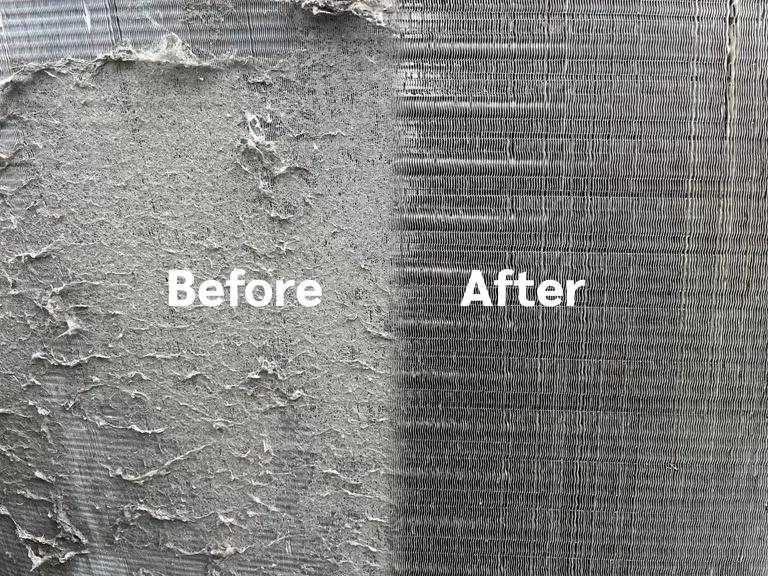
- Wash the outdoor coil — cottonwood, pollen, and Maury County dust mat it over
- Clear and treat the condensate drain, and test the float switch that shuts the system down before water hits your ceiling
- Test the capacitor and contactor — the two parts most likely to kill a July afternoon
- Check refrigerant charge by measurement, not by guessing from a gauge glance
- Check airflow, filter fit, and temperature split across the coil
- Tighten and inspect electrical connections; test the thermostat cycle
What a heating tune-up actually includes
- Clean burners and the flame sensor on gas furnaces; inspect the heat exchanger
- Test the igniter, inducer, pressure switches, and safety limits in the order the furnace uses them
- On heat pumps: test defrost, reversing valve, and every backup heat strip — a dead strip hides until the coldest night
- Check gas connections and carbon monoxide safety on fuel-burning equipment
- Look at accessible duct runs for pulled-apart or crushed sections
The two visits, side by side
| Cooling visit — March / April | Heating visit — September / October | |
|---|---|---|
| Season it protects | Mid-May to late September: the muggy months, peak runtime | Late November to February: cold snaps, AUX-heat season |
| Part most likely to be caught weak | Capacitor and contactor — the July killers | Igniter, flame sensor, heat strips that died quietly over summer |
| Water check | Drain cleared and treated; float switch tested before the first humid week | Condensate check on high-efficiency furnaces; pan and drain inspected |
| Safety check | Electrical connections, disconnect, breaker sizing | Heat exchanger inspection, gas connections, carbon monoxide check on fuel-burning units |
| What you hear from us after | Charge and airflow readings, and which part measured weak — in writing | Ignition and safety readings, plus defrost and strip tests on heat pumps |
Filters: the MERV table nobody hands you
| Filter | Catches | The catch |
|---|---|---|
| Basic / low MERV | Big dust and lint; protects the blower more than the air | Fine dust and pollen sail through |
| MERV 8–11 | Most household dust and a good share of pollen — the sweet spot for most Columbia systems | Change on schedule; a loaded MERV 11 chokes airflow like any dirty filter |
| MERV 13+ | Finer particles, some smoke and bacteria-size material | Only if the return and blower can handle it. Starved airflow can freeze a coil — ask before you jump |
| Media / cabinet filter | Deep pleats, months of capacity, high capture without the airflow penalty | Needs the cabinet installed at the return; then changes are a few times a year, not monthly |
Winter prep and seasonal start-up — the visit before the season
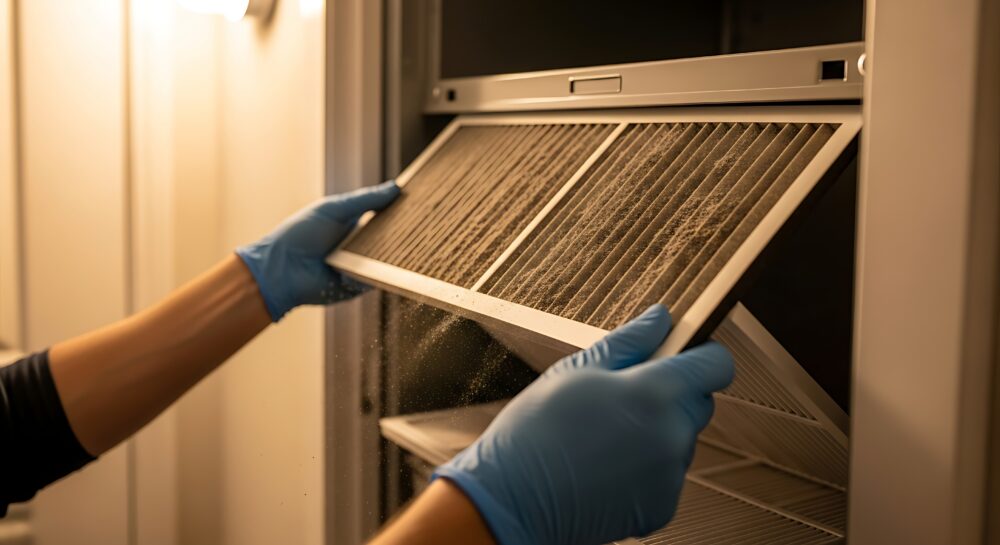
Half the maintenance calls we get are really one sentence: “service the heater, change the filter, and make sure everything is good before we use it this winter.” That is exactly what the fall visit is — a start-up check before the first cold night, not after it: ignition tested in the order the furnace uses it, flame sensor cleaned, safeties run, heat strips tested one by one on a heat pump, and the filter swapped. The spring visit is the same idea in reverse: the cooling system started up and measured before the first humid week, with the drain cleared while a clog is still a small job. A system checked while the weather is mild gives you time to decide on anything it finds; the same finding on the first cold snap or the first heat wave does not.
What you pay for, stated before anyone books
The fee questions are fair ones, so here is the straight answer in writing: a tune-up covers the checklist on this page — the cleaning, testing, and measuring listed for that season — and the readings from it go on your invoice. Anything the visit finds beyond the checklist is priced in writing before that work starts, with the honest urgency attached: today, this season, or watch it. We do not publish a single tune-up or diagnostic figure on this page, because the honest figure depends on the system — how many systems, what type, what the visit finds — and a printed number that does not fit your house helps no one. When you call, the visit and what it covers are stated on the phone before you agree to it. That is the same price-in-writing rule that runs on every page of this site.
Plans, stated plainly
Other Columbia companies price their plans several ways — monthly club fees with a bundle of home services, per-visit tune-up specials, plans with no price shown at all. Ours is simple to judge: ask us for the plan terms in writing — how many visits a year, what each visit covers, what discount applies to repairs, how extra systems are charged, and whether plan members skip emergency fees. We will hand you those terms on one page. Any plan you cannot read in two minutes is a plan designed to be sold, not used.
Your half of the year — the homeowner calendar
Our two visits cover the machine. These small jobs, spread across the year, cover the house around it. None of them needs a tool you do not own.
| When | Job | Time it takes |
|---|---|---|
| Monthly, May–Sep | Filter check against a light; swap if you cannot see light through it | 2 minutes |
| March | Call for the cooling tune-up before the first warm week stacks the calls | One phone call |
| First humid week | Find your condensate drain outlet and confirm it drips when the AC runs | 5 minutes |
| June | Walk the outdoor unit: two feet clear, coil face free of grass and cottonwood | 5 minutes |
| September | Call for the heating tune-up; test the thermostat in Heat mode on a mild day, not the first cold night | 10 minutes |
| October | Fresh carbon monoxide alarm batteries if your home has gas or propane; check the alarm's date stamp | 5 minutes |
| First cold snap | Glance at the thermostat during a heat run: AUX showing briefly is fine, AUX all day at 45 degrees outside is a call | 1 minute |
The paper trail: why we write the numbers down every visit
One tune-up is a snapshot. Two years of tune-ups are a trend, and the trend is where the money gets saved. A capacitor that tested at full rating last spring and measures weak this spring gets replaced on a planned visit for a planned price — the same part found dead in a July heat wave is an emergency call. So every visit’s readings go on your invoice and into your system’s record with us: charge, temperature split, capacitor test, strip and defrost results on a heat pump, ignition readings on a furnace. When a part starts sliding, you hear it from a number on paper, with time to decide — that record is the difference between a shop that knows your system and a shop that meets it fresh at every breakdown.
Packaged units and mini-splits get tuned up differently
| System | What changes on the visit |
|---|---|
| Packaged unit | Everything is in the one outdoor cabinet, so the whole checklist happens out there: burners or strips, coils, and the duct connection where it leaves the cabinet — the joint that leaks on packaged systems most |
| Mini-split | Each indoor head’s washable filter gets cleaned, the outdoor coil washed, and every head’s drain line checked — a blocked mini-split drain drips down the wall inside, and it is the most preventable call on these systems |
| Two systems in one house | Both get the full checklist, both sets of readings recorded. Ask for the extra-system terms in writing before you join any plan — ours or anyone’s — because that line is where plan prices quietly change |
If a tune-up finds a problem, here is what does not happen
Nothing beyond the tune-up gets done — or sold — on the spot without a price in writing first. You get the finding, the reading behind it, the repair price, and the honest urgency: fix it today, plan it this season, or watch it with a note in the record. A tune-up that turns into a sales ambush is why people stop calling for tune-ups, and a skipped tune-up is how a weak capacitor becomes a July emergency. The visit only earns its keep if you trust what it finds.
Proof on maintenance, not promises
- Licensed & insured in Tennessee, Columbia-based at 1230 Industrial Park Rd — the same shop answers for the tune-up and for the repair it might find
- Readings in writing on every visit, kept as your system’s record, so the next visit compares against your own baseline
- Plan terms on one page before you join: visits per year, what each covers, the repair discount, and how extra systems are charged
When a tune-up turns into something else
A tune-up sometimes finds the next job, and each finding has its own page. A charge that drops every year is a leak, and the repair path is on the AC repair page; a furnace safety that fails its test goes to heating repair, not to a sales pitch. Weak airflow with a clean filter usually lives in the ducts — see duct repair & cleaning — and when the readings say the system itself is at the end, repair or replace is priced both ways, in writing, with no clock on your decision.
Call for the tune-up before the season does the testing for you.
A cooling tune-up in March or April and a heating tune-up in September or October catch the weak capacitor, the clogged drain, and the dirty flame sensor while they are still small jobs. Call and we will set a real time window on the phone.
Licensed & insured in Tennessee · ★★★★★ 5-star rated · 25 years in business · 1230 Industrial Park Rd, Columbia, TN
Maintenance FAQs
How often should I change my filter?
Every 30 to 90 days depending on the filter and the house. Thin 1-inch filters in a house with pets or a gravel drive can be done at 30 days in summer. Hold it up to a light: if you cannot see light through it, it is costing you airflow. Undersized returns and cheap fiberglass filters are the two filter problems we find most in older Columbia homes.
Does a tune-up really prevent breakdowns?
It prevents the preventable ones: the clogged drain that floods a ceiling pan, the weak capacitor that dies in a heat wave, the dirty flame sensor that quits at midnight. It cannot make a 16-year-old compressor young. We will tell you which parts measured weak so you can plan, not be surprised.
My system is brand new. Does it need service already?
Yes, for two reasons: many equipment warranties expect documented maintenance, and new Spring Hill installs deserve a first-year check of charge, drain, and duct connections after the house settles. Builder installs are not always finished installs.
Is a maintenance plan worth it, or should I just pay per visit?
It depends on the system and on you. A plan makes the most sense when a system is eight years old or more, when the house has more than one system, or when you know you will not book on your own — what it really buys is both visits happening on time, priority booking when the first heat wave or cold snap stacks up calls, and a discount on repairs. If your system is young, under warranty, and running well, paying per visit can be the better buy. We will show you both ways, with the plan terms in writing: visits per year, what each visit covers, the repair discount, and how extra systems are charged.
Does skipping maintenance void my warranty?
For a lot of equipment, the maker expects documented yearly service, and a claim on a system with no service record can turn into an argument you do not want in the middle of a breakdown. We do not print a blanket rule here because the terms change by brand and by model. Keep your service invoices, and on any new install we hand you the warranty terms in writing, including what you have to do to keep them.
What is the difference between a tune-up and a filter change?
A filter change takes five minutes and one part. A tune-up is the checklist above: capacitor and contactor testing, charge measured, coils washed, drain cleared and the float switch tested, safeties run in order on heating, and the numbers written down. If a company’s “tune-up” is a filter and a glance, you did not get a tune-up.
Two visits a year. That is the whole plan.
Cooling in spring, heating in fall — the checks on this page, the readings on paper, and the small parts caught before they shut the system down in July or January. Call for the first visit now.
Licensed & insured in Tennessee · ★★★★★ 5-star rated · 25 years in business · 1230 Industrial Park Rd, Columbia, TN