Home › Mini-Splits
Ductless Mini-Split Installation in Columbia, TN
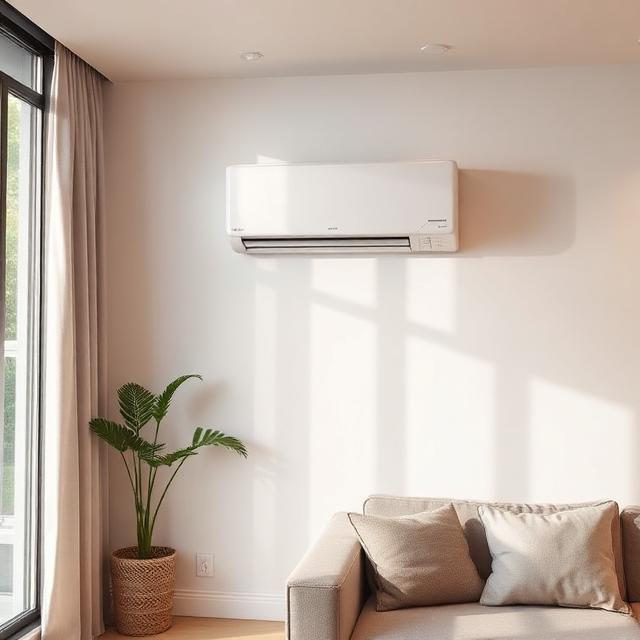
Mini-split installation in Columbia, TN heats and cools a room or a whole addition with no ductwork at all. For downtown Columbia cottages, garage conversions, sunrooms, and additions where running ducts would mean tearing up the house, it is often the cleanest answer — one outdoor unit, one or more quiet indoor heads, each room on its own setting.
5-star ratedLicensed & insured in Tennessee25 years in businessColumbia, TN · Price in writing before work starts
Where mini-splits fit Columbia homes
Historic and downtown homes
Older homes near the square were built before ducts. A mini-split adds real heating and cooling without cutting chases through plaster walls and original floors.
Additions and garages
A bonus room, garage apartment, workshop, or sunroom your main system was never sized for. One head handles the room without starving the rest of the house.
The room that is always wrong
A bedroom over a garage or a far room at the end of a long duct run. Sometimes ducts can fix it; when they cannot, a head in that room ends the fight.
Rural Maury County buildings
Shops, barns with finished rooms, and guest houses on county properties where a second full system makes no sense.
Sizing a mini-split, room by room
| Room | What drives the size | Local example |
|---|---|---|
| Bedroom | Square footage, one exterior wall or two, ceiling height | Back bedroom of a Hampshire Pike ranch that the ducts never reached well |
| Sunroom / glass room | Glass area and sun direction — a west-facing sunroom needs far more than its square footage suggests | Three-season room in Spring Hill that is only usable two seasons without a head |
| Garage / workshop | Door insulation and how often the big door opens; heat for winter work hours | Garage apartment or shop on a county property off Santa Fe Pike |
| Downtown cottage, whole house | One head per enclosed room; open living areas can share | Historic home near the square where ducts would mean tearing up plaster and floors |
What decides the setup
- Heads and zones: one head per enclosed room is the honest rule; open plans can share
- Sizing per room: square footage, ceiling height, windows, and sun — a west-facing glass sunroom is not a bedroom of the same size
- Heat, not just cool: mini-splits are heat pumps, so the same unit heats in winter — ask for the low-temperature rating that fits Columbia cold snaps
- Placement: outdoor unit location, line-set route, and where condensate drains — planned before the drill comes out
Where the indoor head goes — placement trade-offs
| Mounting | What it does well | What to watch |
|---|---|---|
| High wall head | The standard pick: blows over the room, cheap to run lines to, easy to service | Needs wall space above door height; cold air falls, so heating reach to the floor is the weak side in a tall room |
| Ceiling cassette | Sits in the ceiling and blows four ways — the tidy answer for open plans and finished rooms with no spare wall | Needs ceiling depth and attic or joist access above it; costs more to fit than a wall head |
| Floor console | Blows low, which suits heating and rooms with low or sloped ceilings, like knee-wall attic rooms | Furniture can block it; it gives up floor space a wall head does not |
| One outdoor unit, several heads (multi-zone) | One pad, one electrical run, a head per room — the usual build for additions and whole small homes | Heads share the outdoor unit's capacity, so sizes are picked room by room, not by the biggest room alone |
Two basics decide whether any of these placements behaves. Condensate: every head makes water in cooling season, and that water needs a drain route with fall, or a small pump where gravity cannot get there — a drain run wrong is the drip on the wall six months later. Line set: the copper pair and control cable between head and outdoor unit have length limits, and every bend and extra metre is capacity the system does not get back, so the outdoor unit goes where the lines run short and straight, not just where it looks neat. Both get walked and agreed before a hole is drilled — that walk is step one on our install list below.
Single-zone or multi-zone? The two ways a mini-split job is built
| Single-zone (one outdoor unit, one head) | Multi-zone (one outdoor unit, several heads) | |
|---|---|---|
| Fits | One room: garage conversion, sunroom, the bedroom ducts never fixed | Several rooms with no ducts: a downtown cottage, a full addition |
| Control | That room, on its own setting, fully apart from the house system | Each head on its own setting; rooms can differ |
| Failure shape | One room is down if the unit is down | The shared outdoor unit is a single point — if it stops, every head stops |
| Cost shape | Lowest way into ductless; one line set, one drain | Costs less than several single-zone systems, more than one; line sets and drains for every head |
Looking after a mini-split — the jobs are small and they matter
- Wash the head filters monthly in heavy season. They slide out by hand and rinse in a sink. A matted mini-split filter chokes the head quietly — no big filter slot to remind you.
- Keep the outdoor unit clear and the drain line open. The head makes condensate all summer; a blocked drain drips down the wall inside, which is the most common mini-split call we get.
- Set it and leave it in winter. Heat-pump mini-splits run best holding a steady setting. Big daily swings make them work harder, the same as a central heat pump.
- Watch defrost in a cold snap. Outdoor frost that melts away is normal. A unit iced solid that never clears is the same call as a central heat pump in the same state.
The one-head-per-house pitch: if a quote puts a single head in a hallway and promises it will heat and cool a closed-door, multi-room house, ask for that promise in writing. Air does not turn corners into shut bedrooms. Rooms first, equipment second — that order is the whole job.
Mini-split install day, step by step
Layout walked before a hole is drilled
Each head’s wall, the line-set route to the outdoor unit, and where each head’s condensate drains. You approve the layout on the wall, in pencil terms, before tools come out — head placement is the one decision that is hard to undo.
Heads mounted, lines run
Indoor heads mounted level — level is not looks; the drain inside the head only runs one way — and the refrigerant lines, drain, and control wiring run through one small hole per head to the outside.
Outdoor unit set and wired
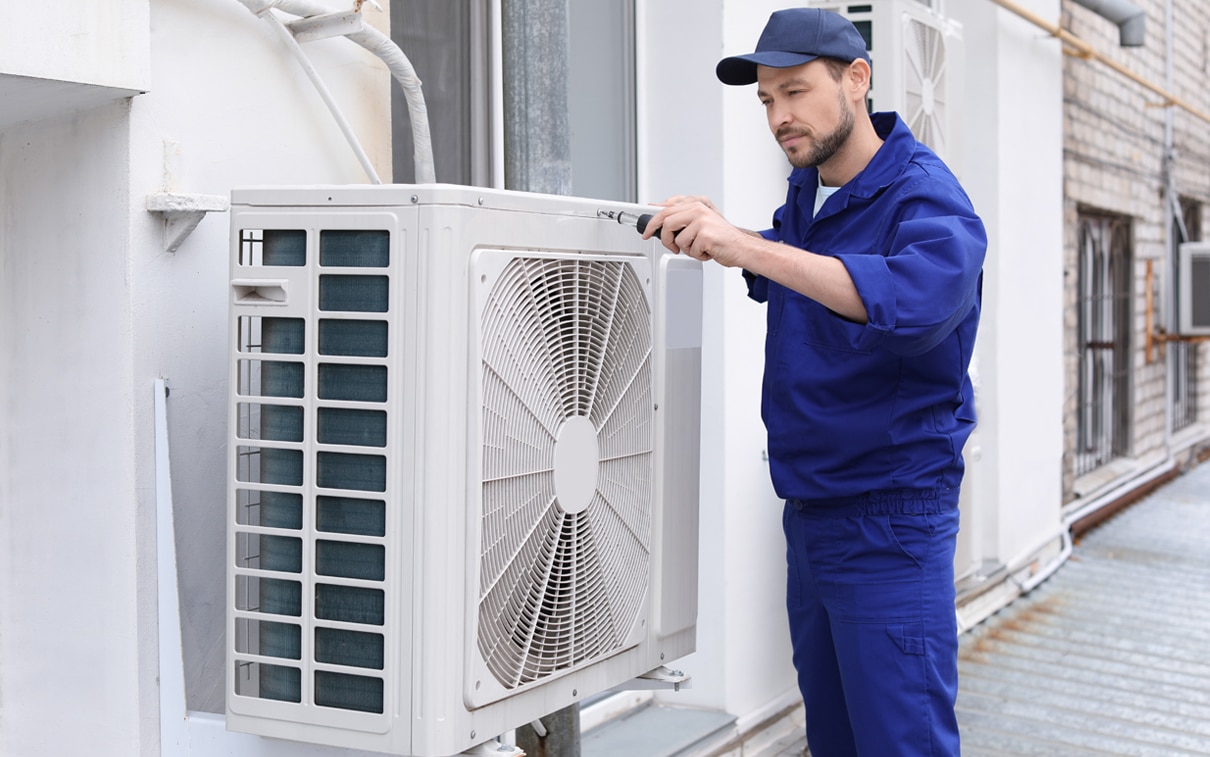
Set on a level pad with room to breathe, on its own electrical run. Heat-pump mini-splits draw real power in a cold snap, so the circuit is sized for heating, not just cooling.
Lines pressure-tested and vacuum pulled
The sealed system is tested and evacuated before refrigerant is released into it. Moisture left in a line set is a compressor problem scheduled for later, which is why this step is on the paperwork, not skipped on a hot day.
Every drain tested with water
We run water through each head’s drain before we leave. A drain that drips down the inside wall is the most common mini-split call there is, and it is nearly always an install detail, not a defect.
Controls handed over, not just installed
Each remote or app set up, Heat mode and defrost explained, and the washable filter shown in your hands — where it is, how it slides out, how often it wants rinsing.
After the install: mini-split problems we get called for
| Problem | Usually means |
|---|---|
| Water dripping from the head down the wall | A blocked or badly pitched drain line — the fix is the drain, and it should be a short visit |
| Head blows, room stays warm or cold | A matted head filter first, then charge or a sensor fault — the filter check is free and takes two minutes |
| Outdoor unit iced solid in a cold snap | The same story as a central heat pump: frost that clears is defrost; a shell that stays is a fault. EM-style backup heat for the room, then a call |
| One head of several not responding | Remote, sensor, or a control fault on that head — the rest of the system running fine is the clue that it is local to the head |
| Musty smell from one head | A coil and drain pan inside the head staying wet. The head gets cleaned and the drain checked — scented sprays last a week |
| Head cools but will not heat — cool air in heat mode, or an error code on the display | A heating-mode fault: tell us the error code exactly as shown when you call — codes are how the head reports its own fault, and the code plus “cools fine, no heat” narrows the visit before we arrive. Do not keep restarting it to clear the code |
| Head stuck at one temperature — remote works, setting will not move it | A sensor or control fault on that head. Try fresh remote batteries first; if the head still holds one temperature no matter what it is set to, that is the finding to report |
| Water at the head that is not the usual drain drip | A leaking flare connection where the refrigerant lines join the head, or a drain fault — either way, note whether the drip is water-clear and where it starts, and call rather than running the head |
Deep cleaning a mini-split head — what it is, and what it is not
Mini-split heads collect dust and moisture on the coil, blower wheel, and drain pan inside the head itself — rinsing the washable filter does not reach those parts. A deep clean opens the head, cleans the coil and wheel, and flushes the drain, which is why it is the fix for a head that smells musty, blows weaker than it did, or drips despite a clean filter. With more than one head, each head is cleaned on its own — three heads is three cleans, not one. Callers also ask whether common mini-split parts ride on the truck: the honest general answer is the same one on our AC repair page — the truck stocks the common parts that fail most across the systems we service, and model-specific parts are priced in writing and ordered against your unit's model and serial numbers.
Already bought your mini-split? Read this before it goes on the wall
Plenty of mini-splits get bought online or at a warehouse store before anyone measures the room, and then the owner goes looking for someone to fit them. We get those calls. Here is the honest shape of it: call us before you buy, not after, whenever you can — five minutes on the phone with the room size, the model you are looking at, and where the outdoor unit would sit can catch a wrong size or a line-set run the unit cannot make before money is spent. If the unit is already in your garage, call with the make and full model number in hand. What decides whether it can be fitted is not the purchase, it is the fit: the head has to match the room's load, the outdoor unit's capacity has to match the heads, the line-set length has to sit inside the maker's limits, and the electrical has to carry it. Where a customer-supplied unit honestly fits the room, the install is the same careful job laid out on this page — layout walked, lines pressure-tested, drains tested — priced in writing like any install, with one plain difference: the equipment warranty is the maker's, held by you as the buyer, and our paperwork says so in writing rather than letting it surface later. Where the unit does not fit the room — undersized for a glass sunroom, or a multi-head set whose outdoor unit cannot carry its heads — we will tell you that before a hole is drilled, not after. What we will not do is hang a unit we know is wrong for the space and let the first cold snap make the argument.
Proof on a mini-split job, not promises
- Licensed & insured in Tennessee, Columbia shop at 1230 Industrial Park Rd
- A coverage map in writing before pricing: which head covers which room, room by room — the promise a hallway-head quote will not make
- Low-temperature heating rating named on the quote, so “it heats in winter” is a number you can hold us to in a cold snap
- Vacuum and drain tests recorded on the install paperwork — the two invisible steps that decide whether the system is trouble-free
Mini-splits and the rest of the house
A mini-split rarely stands alone. Each indoor head runs on its own remote or wall control, and tying the addition into the same routine as the main house is a controls question — the options are on the thermostats & zoning page. Because a mini-split is a heat pump, its winter behaviour — defrost, AUX expectations, and what “blowing cool” really means — follows the same rules as the heat pump page. And in a garage conversion or sunroom that still feels damp after the equipment goes in, the remaining problem is moisture, which is the air quality & dehumidifier conversation, not a bigger head.
Want a price for the room the ducts never reached?
Call for a mini-split quote. We size room by room, talk through head placement and the electrical work in plain words, and put the full job price in writing.
Licensed & insured in Tennessee · ★★★★★ 5-star rated · 25 years in business · 1230 Industrial Park Rd, Columbia, TN
Mini-split FAQs
Will a mini-split heat in a Columbia winter?
Yes, if it is spec’d for it. Mini-splits are heat pumps. Ask for the unit’s heating capacity at low outdoor temperatures, and for larger or drafty spaces we will tell you straight if a backup heat source still makes sense on the coldest nights.
How many heads do I need?
Count enclosed rooms, not square feet alone. A single head cannot push air through doorways into closed bedrooms. We lay the rooms out with you and mark exactly what each head covers before pricing.
Are mini-splits cheaper to run?
They can be, because you only condition the rooms you use and there are no duct losses. They are not magic: a leaky, uninsulated garage conversion still costs what it costs. Insulation first, then equipment, is the order that pays.
Is a mini-split the same thing as a heat pump?
Yes — a mini-split is a heat pump. The real choice is not mini-split versus heat pump; it is ductless versus ducted. If your house has sound ducts that reach every room, a ducted system is usually the simpler whole-house answer. If a space has no ducts, or one room never holds temperature while the rest of the house is fine, ductless puts the heating and cooling right in that room. Plenty of Columbia homes end up with both: central for the house, one head for the room central never fixed.
I do not like the look of a unit on the wall. What are my options?
Fair concern, and worth raising before the quote, not after. Most heads mount high on a wall, but there are also ceiling cassette and low wall units that sit more like a radiator, and short ducted indoor units that hide in a ceiling or closet for one room or a small group of rooms. They cost more and need the space to fit them, and we will show you the choices for your room with the price of each in writing.
One room, one head, sized right.
Cottages, additions, garages, and shops across Maury County cool and heat well with ductless — when the sizing and placement are done room by room. Call for the quote and get it in writing.
Licensed & insured in Tennessee · ★★★★★ 5-star rated · 25 years in business · 1230 Industrial Park Rd, Columbia, TN